
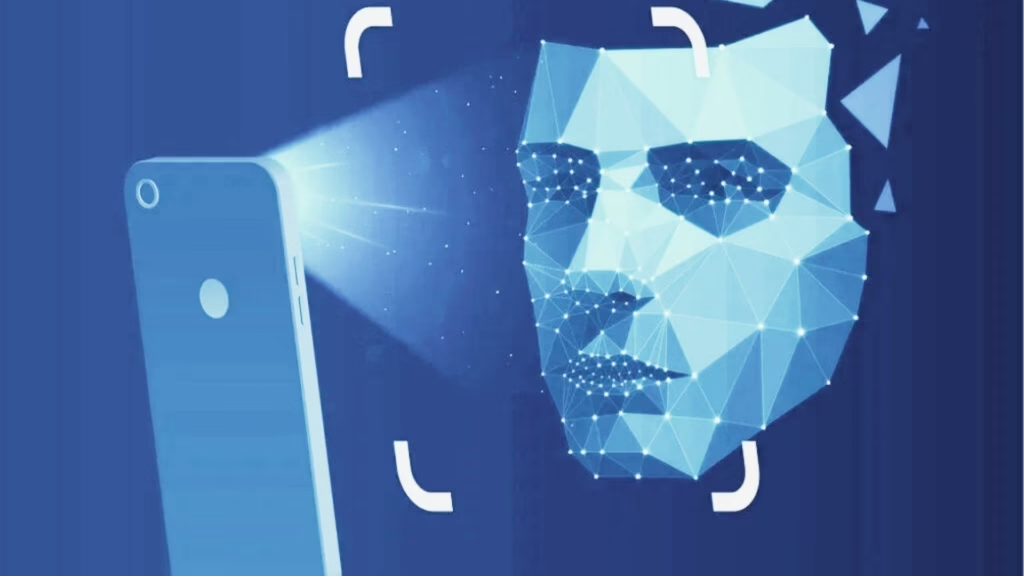
Facial recognition technology has rapidly moved from science fiction into everyday reality. From unlocking smartphones to monitoring public spaces, the technology is increasingly used by governments, corporations, and law enforcement agencies. While its efficiency and convenience are undeniable, ethical concerns surrounding facial recognition technology continue to spark global debate.
At the heart of this discussion lies a fundamental question: how can society balance technological progress with individual rights and freedoms?
How Facial Recognition Technology Works
Facial recognition systems use artificial intelligence and biometric data to identify or verify individuals based on facial features. Cameras capture images, which are then analyzed and compared against databases to determine identity.
Common applications include:
- Smartphone authentication
- Airport security and border control
- Law enforcement investigations
- Retail and commercial surveillance
As adoption increases, so does scrutiny over how the technology is used and governed.
Privacy and Consent Concerns
One of the most significant ethical challenges is privacy. Facial recognition often operates without individuals’ explicit knowledge or consent, particularly in public spaces.
Key privacy issues include:
- Continuous surveillance without opt-in
- Collection and storage of sensitive biometric data
- Limited transparency about data usage
Unlike passwords, biometric data cannot be changed if compromised, making privacy risks especially severe.
Surveillance and the Risk of Abuse
Facial recognition technology enables large-scale surveillance, raising concerns about misuse by authorities or private entities. When combined with existing data sources, it can create detailed profiles of individuals’ movements and behaviors.
Potential risks include:
- Mass surveillance of citizens
- Suppression of freedom of expression
- Targeting of political activists or minority groups
Unchecked surveillance can erode civil liberties and undermine democratic principles.
Bias, Accuracy, and Discrimination
Algorithmic bias is another major ethical issue. Studies have shown that facial recognition systems can perform unevenly across different demographic groups, particularly affecting people of color, women, and younger individuals.
Consequences of biased systems include:
- Higher rates of misidentification
- Wrongful arrests or accusations
- Reinforcement of existing social inequalities
Ensuring fairness and accuracy is essential to prevent harm and discrimination.
Accountability and Transparency Gaps
Many facial recognition systems are developed and deployed with limited public oversight. Proprietary algorithms and opaque decision-making processes make it difficult to assess accountability.
Ethical concerns arise when:
- Organizations refuse to disclose how systems work
- There is no clear mechanism for contesting errors
- Responsibility for misuse is unclear
Transparency is critical to building trust and ensuring responsible deployment.
Data Security and Breach Risks
Facial recognition relies on large biometric databases, making them attractive targets for cyberattacks. A breach involving facial data poses long-term risks that extend beyond traditional data theft.
Data security concerns include:
- Unauthorized access to biometric databases
- Long-term identity theft risks
- Use of stolen data for malicious purposes
Strong security measures are essential to protect individuals from irreversible harm.
You Can Also Read: practical quantum computing
Legal and Regulatory Challenges
Regulation has struggled to keep pace with technological advancement. Laws governing facial recognition vary significantly across regions, resulting in inconsistent protections.
Current regulatory challenges include:
- Lack of unified global standards
- Limited enforcement mechanisms
- Rapid deployment ahead of legal review
Some regions have introduced bans or moratoriums, while others allow broad usage with minimal oversight.
Ethical Use in Law Enforcement
Law enforcement agencies argue that facial recognition improves public safety, but ethical concerns persist. Errors or overreliance on automated systems can lead to serious consequences.
Ethical policing considerations include:
- Ensuring human oversight in decision-making
- Preventing misuse of surveillance powers
- Establishing clear rules for acceptable use
Responsible use requires strict guidelines, training, and accountability.
The Role of Ethical Frameworks and Analysis
Addressing ethical concerns requires robust frameworks that evaluate both technological capability and social impact. Organizations increasingly rely on data-driven insights to assess risks, biases, and governance practices.
Analytical platforms such as Quinte-Magic support informed decision-making by helping stakeholders evaluate technology trends, ethical risks, and regulatory implications in complex digital environments.
The Path Toward Responsible Facial Recognition
Ethical deployment of facial recognition technology is possible but requires deliberate action. Stakeholders must prioritize human rights alongside innovation.
Key steps toward responsible use include:
- Clear consent and transparency policies
- Bias testing and algorithm audits
- Strong data protection measures
- Comprehensive legal frameworks
Technology should serve society—not compromise fundamental freedoms.
The Future of Facial Recognition Ethics
As facial recognition continues to evolve, ethical considerations will remain central to its future. Public awareness, regulatory action, and ethical design principles will shape how the technology is accepted or rejected.
Future priorities include:
- Human-centered AI development
- Global ethical standards
- Ongoing public dialogue
The choices made today will determine whether facial recognition becomes a tool for empowerment or control.
Final Thoughts
Ethical concerns surrounding facial recognition technology highlight the tension between innovation and responsibility. While the technology offers efficiency and security benefits, its misuse carries profound social risks.
By addressing privacy, bias, transparency, and accountability, societies can guide facial recognition toward ethical and responsible use—ensuring that technological progress respects human dignity and fundamental rights.