
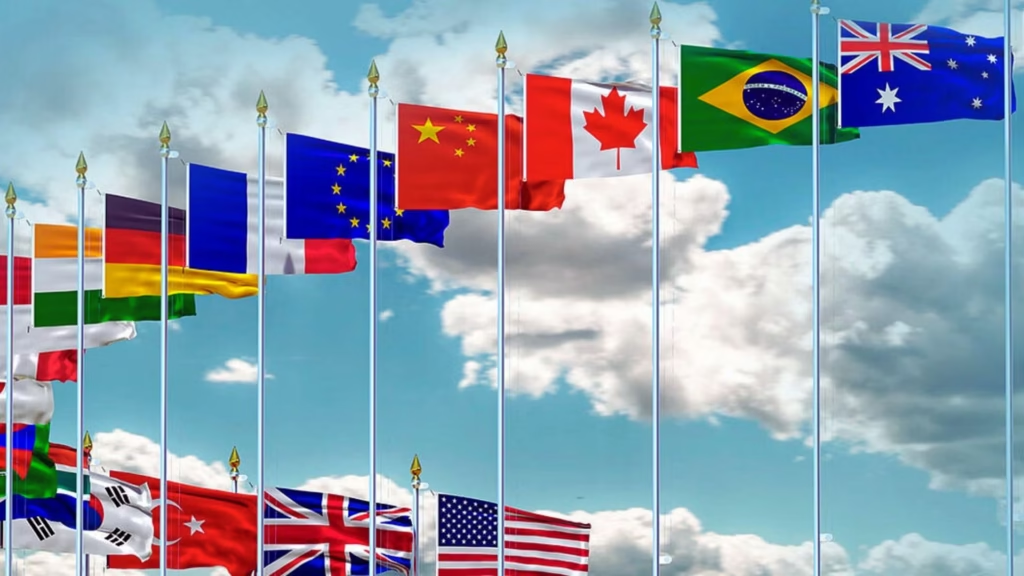
The global political landscape is undergoing a profound transformation. Power balances that once appeared stable are being reshaped by economic competition, technological advancement, regional conflicts, and evolving alliances. These major geopolitical shifts are redefining how nations interact, cooperate, and compete on the world stage, fundamentally shaping modern international relations.
As globalization intersects with nationalism and strategic rivalry, diplomacy is becoming more complex, dynamic, and unpredictable.
The Transition From Unipolar to Multipolar Power
One of the most significant geopolitical shifts is the movement away from a unipolar world dominated by a single superpower toward a multipolar global order. Emerging economies are asserting influence in political, economic, and security arenas.
This shift results in:
- Increased competition among major powers
- Regional blocs gaining strategic importance
- Reduced dominance of traditional Western-led institutions
A multipolar world introduces both opportunities for cooperation and heightened risks of conflict.
Strategic Rivalries and Great Power Competition
Geopolitical competition among major powers is intensifying. Rivalries are increasingly defined by economic influence, technological leadership, and military capabilities rather than confrontation.
Key characteristics of modern rivalries include:
- Competition over global infrastructure and trade routes
- Technological dominance in AI, semiconductors, and cybersecurity
- Expanding military presence in strategic regions
These dynamics influence diplomatic strategies and reshape international alliances.
Regional Conflicts With Global Consequences
Local and regional conflicts now have far-reaching global impacts. Political instability in one region can disrupt energy supplies, trade flows, and diplomatic relationships worldwide.
Major implications include:
- Increased refugee movements
- Volatility in global energy and commodity markets
- Greater involvement of global powers in regional disputes
International relations are increasingly shaped by how nations respond collectively—or unilaterally—to regional crises.
The Changing Nature of Global Alliances
Traditional alliances are being redefined as countries reassess national interests and strategic priorities. While longstanding partnerships remain important, new alignments are forming based on economic, technological, and security considerations.
Notable alliance shifts include:
- Strengthening regional security partnerships
- Flexible issue-based coalitions
- Expanded cooperation beyond military frameworks
These evolving alliances reflect a more pragmatic and interest-driven approach to international relations.
Economic Power as a Diplomatic Tool
Economic influence has become one of the most powerful instruments of modern geopolitics. Trade policies, sanctions, and investment strategies are now central to diplomatic engagement.
Key economic tools shaping geopolitics include:
- Trade agreements and economic blocs
- Sanctions and export controls
- Strategic investment in developing regions
Economic diplomacy allows nations to exert influence without direct military engagement, making it a preferred strategy in global affairs.
Technology and the New Geopolitical Frontier
Technological advancement is reshaping international relations in unprecedented ways. Control over critical technologies has become a key determinant of geopolitical power.
Areas of strategic competition include:
- Artificial intelligence and data governance
- Cybersecurity and digital infrastructure
- Space and satellite technologies
Nations that lead in technology gain significant leverage in both economic and security domains.
You Can Also Read: Climate Policy Global Impact
The Role of International Institutions
International institutions face growing pressure as geopolitical tensions rise. While these organizations continue to facilitate dialogue and cooperation, their authority is increasingly challenged by competing national interests.
Current trends include:
- Calls for institutional reform
- Greater use of bilateral agreements
- Selective multilateral engagement
Despite challenges, international institutions remain vital platforms for managing global risks and conflict resolution.
Strategic Analysis and Global Decision-Making
Navigating complex geopolitical shifts requires timely intelligence and strategic insight. Governments and organizations rely on advanced analysis to anticipate risks and opportunities in international relations.
Platforms like Quinté Magic provide valuable strategic perspectives that help decision-makers understand geopolitical trends, assess global risks, and adapt to rapidly evolving international environments.
Implications for Global Stability
The cumulative effect of these geopolitical shifts is a more fragmented but interconnected world. While cooperation remains essential, competition is increasingly shaping international engagement.
Key implications include:
- Increased uncertainty in global governance
- Higher risks of miscalculation and conflict
- Greater emphasis on diplomacy and strategic communication
Managing these challenges requires sustained dialogue, mutual understanding, and adaptive diplomacy.
The Future of International Relations
Looking ahead, international relations will continue to evolve as geopolitical shifts accelerate. Success will depend on a nation’s ability to balance competition with cooperation and national interests with global responsibility.
Future trends are likely to include:
- More flexible diplomatic frameworks
- Technology-driven geopolitical strategies
- Greater emphasis on regional stability
The world is entering a new geopolitical era where adaptability and strategic foresight will define international influence.
Final Thoughts
Major geopolitical shifts shaping international relations reflect a world in transition. Power dynamics, alliances, and diplomatic strategies are evolving in response to economic, technological, and security challenges. While uncertainty is increasing, so too are opportunities for cooperation and innovation.
Understanding these shifts is essential for navigating the complexities of modern global affairs and building a more stable and resilient international system.